
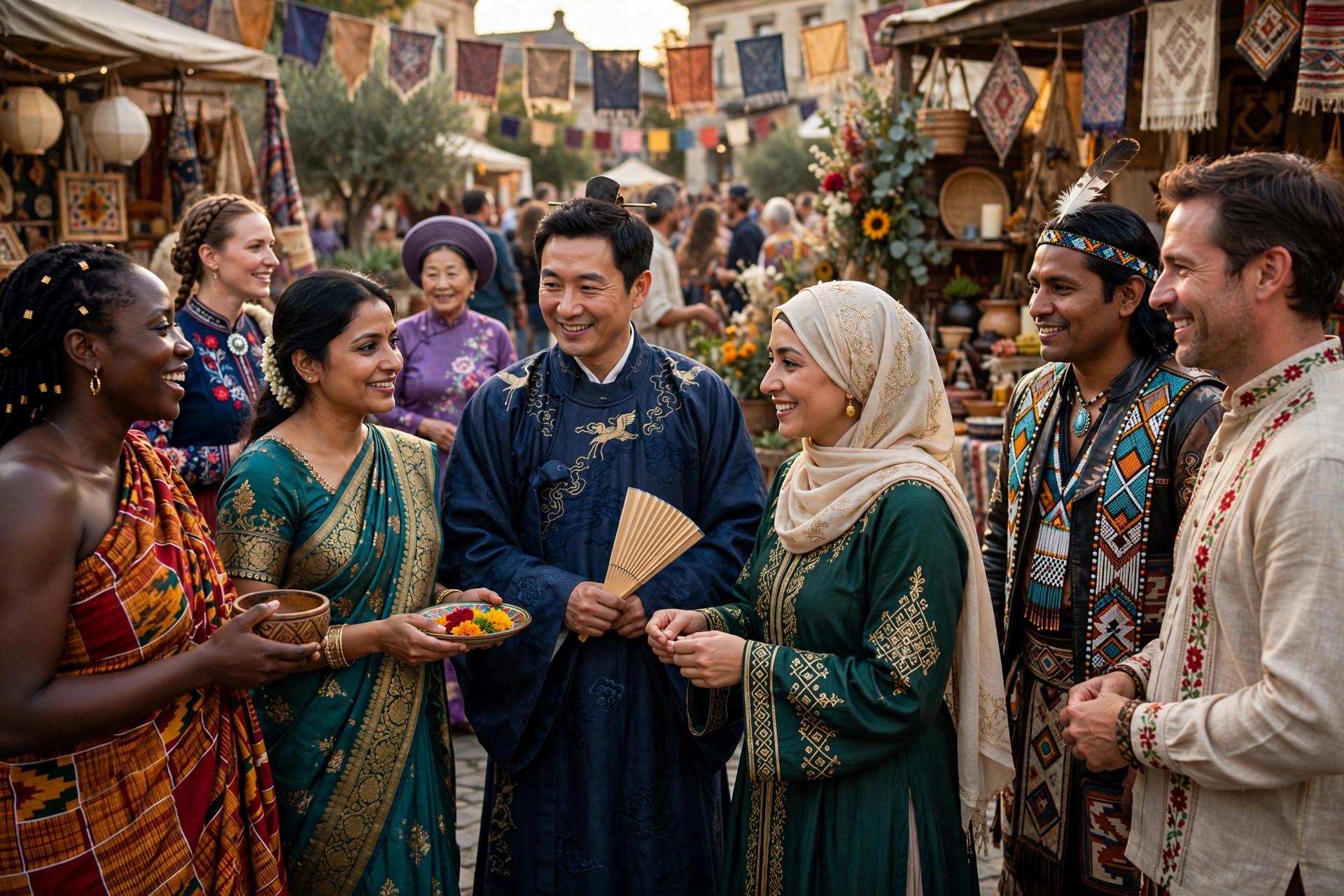
You love the intricate patterns of a West African textile. A friend invites you to wear a kimono to a Japanese festival. A pop star performs in a Native American headdress. Are these moments of beautiful cultural exchange — or something more troubling? The line between cultural appreciation and cultural appropriation is one of the most debated topics in modern life, and understanding it matters for anyone living in a multicultural world.
This is not about policing curiosity or banning cultural exchange. Human cultures have always borrowed from one another — food, music, language, and ideas travel constantly. The question is not whether borrowing happens, but how it happens: with respect and understanding, or with disregard for the people whose culture is being used. Here is how to tell the difference.
What Is Cultural Appropriation?
Cultural appropriation generally means taking elements of a marginalized or oppressed culture — its clothing, hairstyles, music, rituals, or symbols — and using them outside their original context, typically by members of a more dominant culture, without permission, understanding, or respect.
The key ingredients scholars point to are:
- Power imbalance: The borrowing flows from a dominant group toward a historically marginalized one, not the other way around.
- Lack of context: Sacred or meaningful items are used as fashion, costumes, or decoration, stripped of their significance.
- No credit or benefit: The originating community gets neither recognition nor compensation, while outsiders profit or gain social capital.
A classic example: a music festival attendee wearing a Native American war bonnet as a fashion accessory. For many Plains tribes, eagle-feather headdresses are sacred honors earned through acts of bravery and leadership — not party outfits. Wearing one as a costume trivializes something deeply meaningful.
What Is Cultural Appreciation?
Cultural appreciation is the respectful alternative: engaging with another culture in a way that honors its meaning, acknowledges its origins, and ideally benefits or involves the community it comes from.
Appreciation looks like:
- Learning about the history and significance of a cultural practice before participating in it.
- Being invited or welcomed by members of that culture to take part.
- Buying directly from artisans of that culture rather than mass-market copies.
- Giving credit — naming the culture and its creators rather than presenting something as your own discovery.
Consider the difference between a tourist who buys a mass-produced knockoff of Indigenous jewelry at an airport gift shop and one who visits a Navajo artisan market, learns about the silversmithing tradition, and purchases directly from the maker. Same object category, very different relationship to the culture. Find more explorations of how traditions live and change in our Culture category.
Why Appropriation Causes Real Harm
Critics sometimes dismiss this debate as oversensitivity, but the harms are concrete. First, there is the double standard: members of marginalized groups are often punished for the very practices that outsiders are praised for adopting. Black women have faced workplace discrimination for natural hairstyles like braids and locs, while the same styles on white celebrities get celebrated as edgy fashion. That contradiction stings.
Second, appropriation can cause economic harm. When large fashion brands copy Indigenous or traditional designs without compensation, they undercut the artisans whose livelihoods depend on that work — and whose ancestors developed the designs over generations.
Third, there is erasure. When sacred or culturally significant items become trendy costumes, their original meaning gets drowned out. Younger members of the originating culture may even feel embarrassed by traditions that outsiders treat as jokes, accelerating cultural loss.
Common Examples, Explained
Some cases are clearer than others. Wearing a military-style camouflage jacket is not appropriation — military uniforms are not a marginalized culture. But consider these real flashpoints:
- Halloween costumes based on ethnic stereotypes (for example, geisha or Day of the Dead costumes worn without understanding) reduce living cultures to caricatures.
- Sports mascots using Native American imagery have been protested for decades; several professional teams have retired such names and logos in recent years.
- Hairstyles like cornrows and dreadlocks carry deep significance in Black culture and have been subject to discriminatory dress codes — making their casual adoption by outsiders particularly fraught.
- Religious symbols — the bindi, the hijab, tribal tattoos — worn as pure decoration can offend believers for whom these items are sacred.
Context always matters. A non-Japanese person invited to wear a kimono by Japanese hosts at a cultural festival is participating in exchange. A fashion brand selling sacred patterns with no acknowledgment is doing something else.
How to Engage With Other Cultures Respectfully
You do not need to avoid other cultures — quite the opposite. Here are practical principles:
- Learn first. Before wearing, cooking, or performing something from another culture, spend time understanding what it means to the people it belongs to.
- Listen to insiders. If members of a culture say something is offensive, believe them rather than debating it. They are the experts on their own experience.
- Support creators. Buy authentic work from artisans, eat at family-run restaurants, attend cultural events organized by the community itself.
- Ask when unsure. A genuine question — Is it okay for me to wear this? What does it mean? — shows respect, and most people appreciate being asked.
- Avoid the sacred as decoration. Religious garments, ceremonial headdresses, and ritual objects deserve extra caution.
For a positive example of how celebrations can build bridges rather than walls, see how festivals shape cultural identity around the world.
The Gray Areas Are Real
Honest people disagree about where lines fall, and that is okay. Culture is not a museum exhibit — it is alive, and all living cultures borrow. Pizza, now considered quintessentially Italian and American, has roots in flatbreads across the ancient Mediterranean and Middle East. Yoga's global spread involves both sincere practice and commercial dilution. K-pop deliberately blends Korean and Western influences.
The goal is not a world where everyone stays in a cultural lane. It is a world where exchange happens with curiosity, humility, and respect — where we ask who benefits, who is harmed, and whether the people whose culture is involved have a voice in how it is used. Appropriation versus appreciation is ultimately a question about relationships: are you taking, or are you participating?