
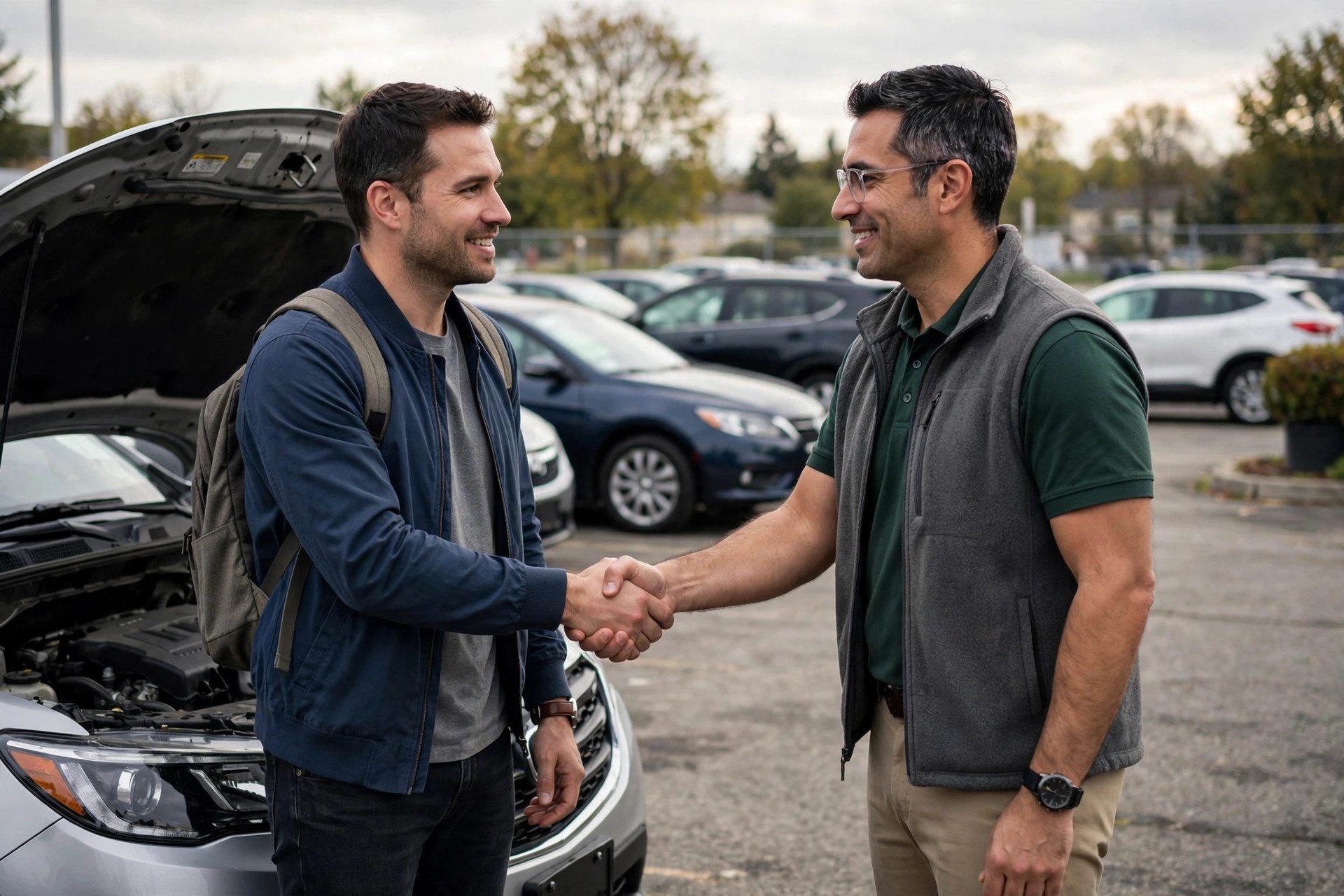
Buying a used car is one of the highest-stakes purchases most people make. Done well, it is the smartest move in motoring — someone else absorbed the steepest depreciation, and you get reliable transport for a fraction of the new price. Done badly, it becomes a money pit on wheels. This guide walks you through every stage: budget, search, history, test drive, inspection, red flags, negotiation, and paperwork.
Set a Realistic Budget First
Decide what you can afford before you fall in love with a car. A widely used guideline is to keep the purchase price within roughly 15 to 20 percent of your annual income, but the purchase price is only part of the story. Your true budget has four more lines:
- Insurance. Get quotes before you buy, not after. Premiums vary enormously by model, your age, your driving record, and where you live. A cheap car with expensive insurance is not a cheap car.
- Taxes and fees. Sales tax, registration, and documentation fees add a meaningful percentage on top of the sticker price. Factor them in from the start.
- Immediate needs. Budget for fresh tires, brakes, or a major service if the car is due for one. Ask the seller what maintenance is coming up.
- A repair reserve. Keep a cushion — at least several hundred, ideally a couple of thousand — for the surprises that used cars occasionally deliver. If you cannot afford the reserve, you cannot afford the car.
Also decide how you will pay. Cash gives you the most negotiating power and no interest costs. Financing is fine if the rate is reasonable, but get pre-approved by your bank or credit union before visiting dealers — a pre-approval lets you compare the dealer's offer against a real alternative instead of negotiating blind.
Where to Look
You have three main sources, each with trade-offs:
- Franchised and independent dealers. More expensive on average, but you get convenience, possible warranties, reconditioning, and consumer-protection rules that vary by country and state. Certified pre-owned programs add an inspection and warranty for a premium.
- Private sellers. Often the lowest prices and the most room to negotiate, and you can usually learn the car's real history from its owner. But sales are typically as-is, with little recourse if something goes wrong.
- Online marketplaces and auctions. Huge selection and transparent pricing data, but you cannot always inspect before bidding — treat sight-unseen purchases as high risk unless there is a return policy or independent inspection option.
Wherever you look, research the specific models on your shortlist. Some cars are famously reliable for 200,000 miles; others are known for expensive failures at 80,000. Owner forums, reliability surveys, and long-term reviews are worth an evening of reading — they tell you which model years to seek and which to avoid.
Check the Vehicle History Report
Before you get emotionally attached, run a vehicle history report using the car's VIN (vehicle identification number). In the US, services like Carfax and AutoCheck compile accident records, title brands, odometer readings, service history, and registration data. The UK has the HPI check; Australia has the PPSR; Canada has Carfax Canada. The names differ, but the principle is the same.
A history report can reveal accidents, flood or salvage titles, odometer rollbacks, lemon-law buybacks, and gaps that suggest hidden damage. But understand its limits: the report only knows what was reported to it. Damage repaired privately without an insurance claim may never appear. Treat the report as a screening tool, not a guarantee — it tells you which cars to walk away from, and it never replaces a physical inspection.
The Test Drive Checklist
Never buy a car you have not driven for at least 20 to 30 minutes on varied roads — city streets, highways, and if possible a hill. Turn the radio off and listen. Here is what to check:
- Cold start. Ideally, start the engine when it is fully cold. Rough idling, smoke from the exhaust, or warning lights that stay on are bad signs.
- Acceleration and gears. The car should accelerate smoothly with no hesitation, slipping, or harsh shifting. In an automatic, gear changes should be nearly imperceptible.
- Braking. Braking should be straight and firm with no pulling to one side, grinding, or pulsing through the pedal.
- Steering and suspension. On a straight road, the car should track straight with the wheel centered. Listen for clunks over bumps, which suggest worn suspension parts.
- Electrics. Test every switch: windows, locks, mirrors, air conditioning (both hot and cold), lights, wipers, infotainment, and the horn.
- Smells and sights. A sweet smell suggests coolant leaking; a burning smell suggests oil or transmission trouble. Check under the car afterward for fresh drips.
Get an Independent Mechanical Inspection
This is the single most important step in the entire process, and the one buyers skip most often. Pay an independent mechanic — one you choose, not one the seller recommends — to inspect the car on a lift before you buy. It typically costs the equivalent of a modest service bill, and it is the best money in used-car buying.
A proper pre-purchase inspection covers:
- Engine and transmission. Leaks, worn mounts, fluid condition and levels, belt and hose condition, and any diagnostic trouble codes.
- Underbody and frame. Rust, collision damage, bent or repaired structural components, and exhaust condition.
- Suspension, steering, and brakes. Wear in bushings, ball joints, shocks, and remaining brake pad and rotor life.
- Tires and alignment. Tread depth and uneven wear patterns, which reveal alignment or suspension problems.
- Electrical and safety systems. Battery health, charging system, airbag warning lights, and the operation of safety features.
Ask the mechanic for two things: what needs fixing now, and what will likely need fixing soon — with cost estimates. Those numbers become your negotiation ammunition. If a seller refuses to let you have the car inspected, walk away. No exceptions.
Spotting the Red Flags
Some cars should be rejected no matter how attractive the price. Learn to recognize the warning signs:
Flood Damage
Flood cars look clean but hide corrosion in wiring and electronics that causes failures for years. Check for a musty or mildew smell, silt or mud under the carpets and in the trunk, moisture under the spare tire, rust on unpainted metal under the dashboard, and water lines in the engine bay or door jambs. A history report may show a flood title brand — but not always.
Odometer Rollback
Digital odometers can be tampered with. Warning signs include wear that does not match the mileage — a worn driver's seat, shiny steering wheel, or worn pedals on a supposedly low-mileage car — and service stickers or records showing higher mileage than the dashboard. Compare the odometer against the history report's recorded mileages.
Salvage and Rebuilt Titles
A salvage title means an insurer declared the car a total loss — from a crash, flood, fire, or theft. Some are repaired well and sold with rebuilt titles at tempting discounts, but they are harder to insure, harder to finance, and worth far less at resale. Unless you are an expert buying at a steep discount with full knowledge, avoid them.
Other walk-away signs: mismatched paint or panel gaps suggesting a poorly repaired crash, a seller who will not show ID matching the title, pressure to decide immediately, or a deal that seems far below market value. For model-specific weak points to watch during inspection, our car maintenance basics guide explains what wears out and when.
Negotiating the Price
Negotiation is expected in used-car buying — the asking price is the opening bid, not the verdict. Come prepared: research what identical cars actually sell for in your area using pricing guides and completed listings, not just asking prices.
- Lead with facts, not feelings. "Similar cars with this mileage sell for X, and your car needs $800 in brakes and tires" beats "give me a better price."
- Use the inspection report. Every flaw the mechanic found is a legitimate discount — or ask the seller to fix safety items before the sale.
- Be willing to walk away. The strongest negotiating position is genuinely not needing this particular car. There is always another one.
- Negotiate the out-the-door price. Dealers love to discount the car and then add fees. Agree on the total you will pay, including every fee and tax.
- Stay polite and unhurried. Pressure tactics work on rushed buyers. Take your time, sleep on big decisions, and never negotiate against yourself by naming a higher number than you mean.
Paperwork and Title Transfer
The deal is not done until the paperwork is. Requirements vary by country and state, but the essentials are universal:
- Title or registration document. The seller signs it over to you. In the US, verify it is a clean title (not salvage or rebuilt), that the VIN matches the car exactly, that there are no liens listed, and that the seller's ID matches the name on the title.
- Bill of sale. A simple document stating buyer, seller, vehicle details (VIN, mileage), sale price, date, and "sold as-is" if applicable. Both parties sign and keep copies.
- Lien release. If the seller still owes money on the car, the lender holds the title. Do not pay the seller directly in this case — arrange for the lender to be paid and the title released, ideally at the lender's office or through an escrow arrangement.
- Transfer promptly. Register the car in your name and pay applicable taxes within your jurisdiction's deadline. In the UK, the V5C logbook transfer is done with the seller; in Australia, each state has its own transfer process and stamp duty.
- Insurance before you drive. Arrange coverage effective from the moment you take possession — driving uninsured, even home from the seller, is illegal in most places and financially reckless everywhere.
After You Buy
Congratulations — now protect your investment. Change all the fluids unless you have proof they are fresh, replace filters, and address any deferred maintenance the inspection flagged. Keep every receipt from day one: a documented service history is the single best thing you can do for the car's future resale value.
With the right preparation, a used car is not a compromise — it is simply the rational way to buy. For more on keeping it running well for years, browse our automotive guides.