
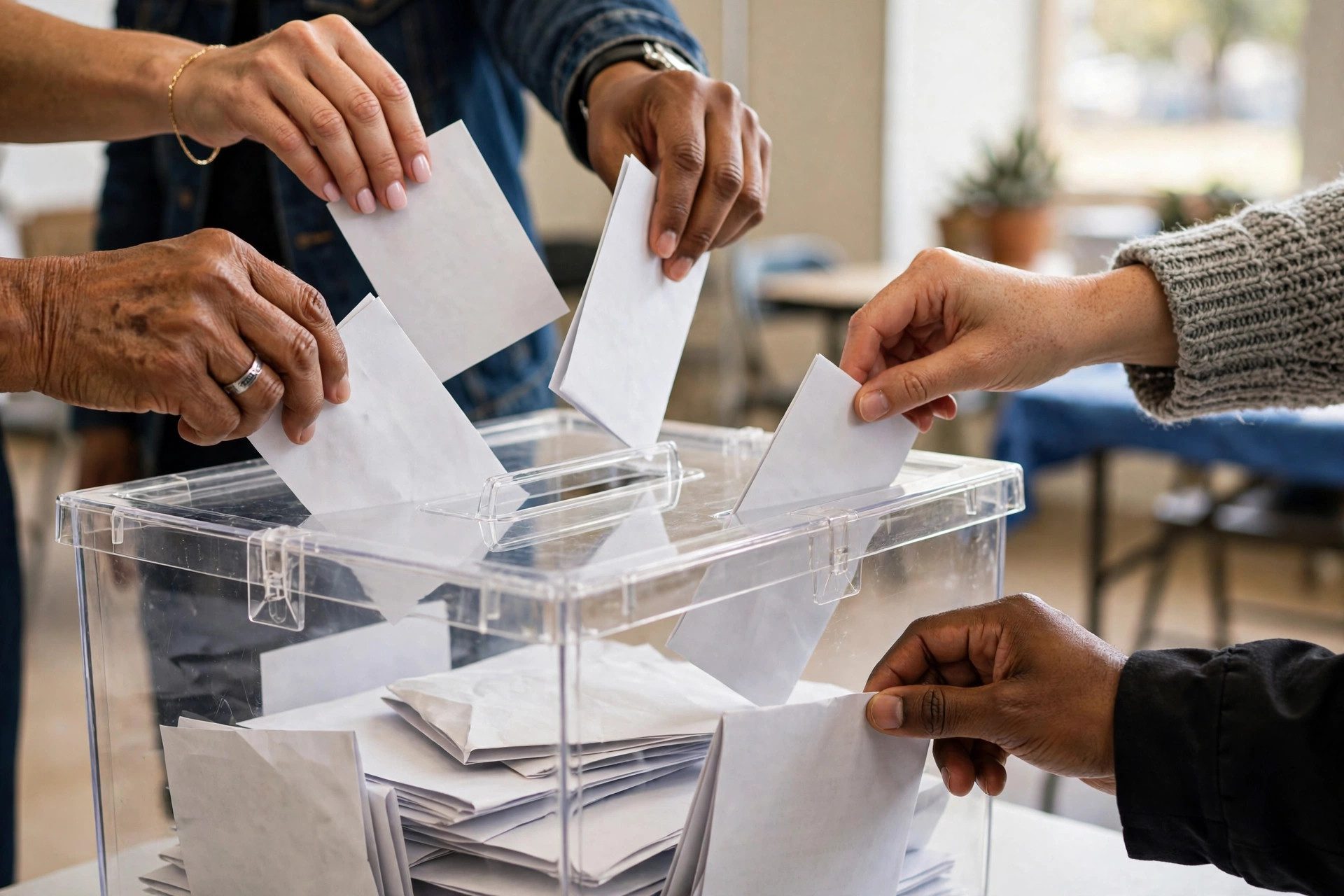
Voting is how citizens choose their leaders and shape the laws that govern them, yet the mechanics of elections can feel mysterious. How do you register? What happens to your ballot after you cast it? How are winners actually determined? Whether you are voting for the first time or want to understand the process more deeply, this guide walks through every stage of how voting works, from eligibility to the final count.
Explore more civic explainers in our government and civics section, including our guide to what democracy is and how democratic systems function.
Why Voting Matters
Elections decide who makes decisions about taxes, healthcare, education, roads, and countless other parts of daily life. Individual votes combine to produce outcomes that affect millions. While one vote rarely decides an election alone, close races happen regularly at every level, from city councils to national parliaments, and low-turnout elections are often decided by small margins.
Voting also sends a signal beyond the winner. High turnout in particular communities or age groups tells politicians which voters they must pay attention to. When groups vote consistently, their concerns get addressed. When they do not, they get ignored. Participation is influence.
Who Can Vote?
Eligibility rules vary by country, but common requirements include:
- Citizenship: Most countries restrict voting to citizens, though some allow resident non-citizens to vote in local elections.
- Age: The voting age is 18 in most democracies, though some countries allow 16- and 17-year-olds to vote in certain elections.
- Residency: You generally vote where you live, and must have lived there for a minimum period in some systems.
- Registration: Many countries require voters to register before election day, while others register citizens automatically.
Some places restrict voting for people with certain criminal convictions, though rules differ enormously and many jurisdictions have moved toward restoring voting rights. Check your local election authority for the exact rules where you live.
How to Register to Vote
If your country requires registration, do it early. Deadlines often fall weeks before election day, and missing them is one of the most common reasons people cannot vote. Registration is usually free and can often be done online, by mail, or in person at government offices.
You will typically need proof of identity, citizenship, and address. After registering, verify your registration status before each election, especially if you have moved, changed your name, or have not voted recently. Voter rolls are periodically updated, and errors happen. Keep your registration current so there are no surprises at the polls.
Types of Elections
- General elections: Regularly scheduled elections for major offices, such as president, parliament, or congress.
- Local elections: Elections for mayors, city councils, school boards, and other local offices. These often have the most direct impact on daily life but the lowest turnout.
- Primary elections: In some systems, parties hold primaries or caucuses to choose their nominees before the general election.
- Referendums and ballot measures: Voters decide policy questions directly, such as bond issues, constitutional amendments, or local ordinances.
- By-elections and special elections: Held outside the normal schedule to fill a vacant seat.
How Ballots Are Cast and Counted
On election day, voters typically check in at a polling place, receive a ballot, mark their choices in private, and submit the ballot. Many places also offer early in-person voting and mail-in or absentee ballots for those who cannot vote on the day.
After polls close, ballots are counted. Paper ballots may be hand-counted or scanned by machines; electronic systems tally votes digitally. Most systems include safeguards: bipartisan observers, sealed ballot boxes, audit trails, and in many places, post-election audits that hand-count a sample of ballots to verify machine tallies. Results are usually reported as precincts finish counting, which is why early results can shift as more votes are tallied.
Recounts occur when margins are extremely close, and the rules for triggering them are set by law. Certified results become official after canvassing, the formal process of verifying and confirming the count.
How Winners Are Determined
Different systems pick winners differently. In first-past-the-post systems, used in the United States, United Kingdom, Canada, and India, the candidate with the most votes in each district wins, even without a majority. In proportional representation systems, used across much of Europe, parties win seats roughly in proportion to their share of the vote. Ranked-choice voting, used in Australia and some US cities, lets voters rank candidates, with the lowest-ranked eliminated in rounds until someone has a majority.
For presidential elections, the United States uses the Electoral College: each state gets electors based on its congressional representation, and most states award all their electors to the statewide winner. A candidate needs 270 of 538 electoral votes to win. This means a candidate can win the presidency without winning the national popular vote, which has happened several times in American history and remains a subject of ongoing debate.
Common Voting Myths Debunked
- Myth: My single vote does not matter. Many local races are decided by dozens of votes, and even in large elections, turnout shapes which issues politicians prioritize.
- Myth: Elections are easily rigged. Modern elections use layered safeguards: paper trails, bipartisan observers, audits, and decentralized administration that make large-scale fraud extremely difficult to execute undetected.
- Myth: You need to be an expert to vote. You do not need perfect knowledge. Nonpartisan voter guides summarize candidates and measures in plain language.
- Myth: Voting takes all day. Most voters finish in minutes, and early and mail voting options make it even easier.
The Bottom Line
Voting works through a chain of simple steps: eligible citizens register, cast ballots by their chosen method, and election officials count and certify the results under observation and audit. The system is not perfect, and reasonable people debate its rules, but participation is what gives it legitimacy and power. Register early, learn what is on your ballot, and vote in every election, not just the big ones. Local races and ballot measures shape your daily life as much as national contests do.