
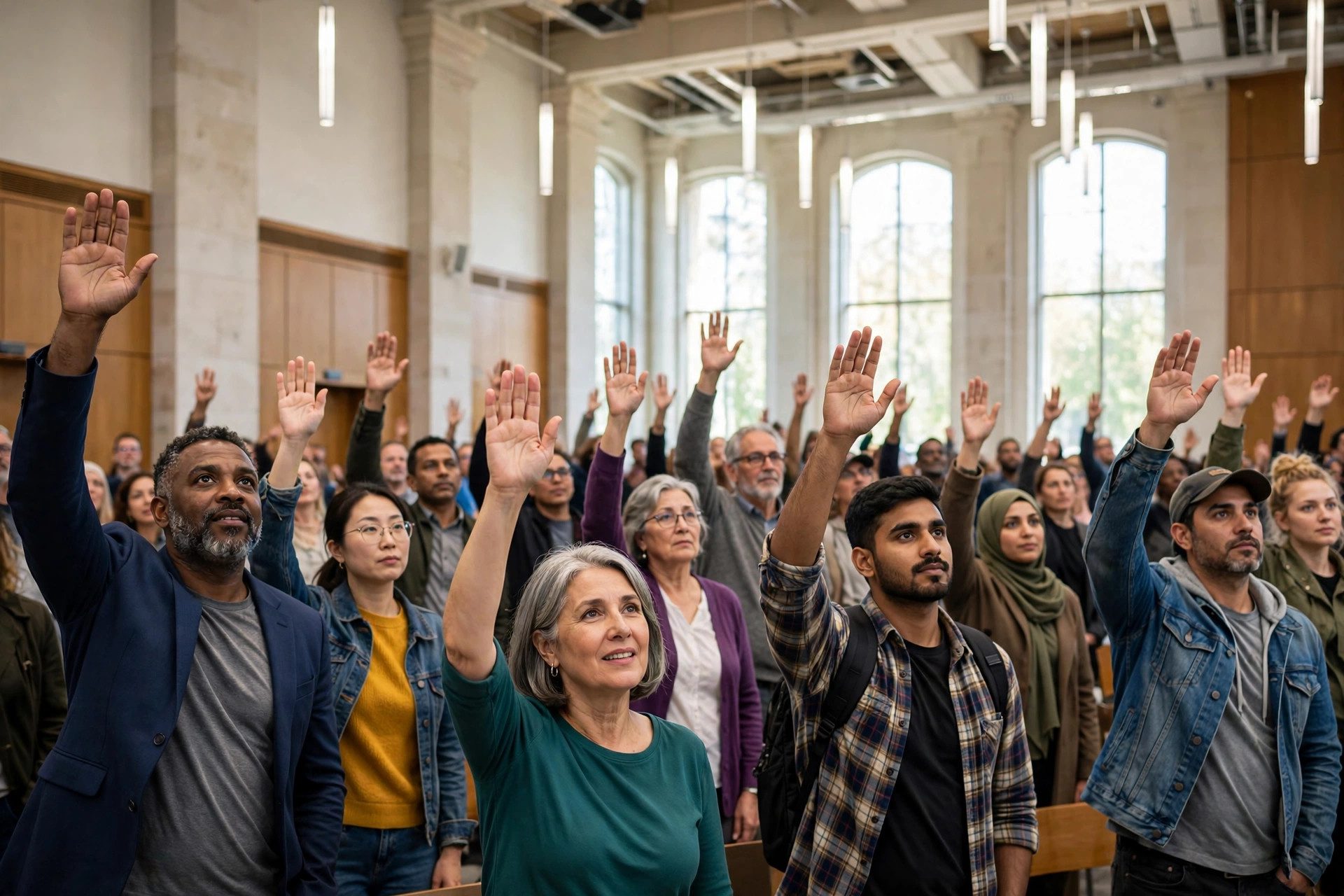
Democracy is one of the most powerful ideas in human history: that ordinary people, not kings or generals, should hold ultimate political authority. Today more than half the world's population lives under some form of democratic government. Yet democracy is often misunderstood, taken for granted, or confused with simply holding elections. This guide explains what democracy really means, how it developed, the different forms it takes, and what it asks of citizens.
Learn how citizens exercise democratic power in our government and civics guides, including how voting works.
What Is Democracy?
The word democracy comes from the Greek demos (people) and kratia (rule): rule by the people. In a democracy, political authority ultimately comes from citizens, who exercise it by choosing representatives, voting on policies, and enjoying protected rights that even governments cannot take away.
It is important to understand what democracy is not. It is not simply majority rule without limits. A system where 51 percent can vote away the fundamental rights of the other 49 percent is not a healthy democracy. Modern democracies combine majority decision-making with constitutional protections for individual rights, the rule of law, and institutional checks that prevent any one group from seizing unchecked power.
A Brief History of Democracy
Democracy was born in ancient Athens around the 5th century BCE, where male citizens gathered to vote directly on laws. It was limited by modern standards, excluding women, enslaved people, and foreigners, but the core idea was revolutionary: political decisions belonged to the citizenry.
The idea faded for centuries under empires and monarchies, then revived during the Enlightenment, when thinkers like John Locke and Montesquieu argued for natural rights and the separation of powers. The American and French revolutions put these ideas into practice, creating republics based on popular sovereignty. The 19th and 20th centuries brought the gradual expansion of suffrage: first to all men, then to women, then the lowering of voting ages and removal of racial barriers.
The late 20th century saw democracy spread dramatically as dictatorships fell across Southern Europe, Latin America, East Asia, and Eastern Europe. Today democracy faces new challenges, but its core appeal endures: no other system gives ordinary people as much say in how they are governed.
Key Principles of Democracy
- Popular sovereignty: Ultimate authority rests with the people, exercised through voting and participation.
- Political equality: Each citizen's vote counts equally, regardless of wealth, status, or background.
- Majority rule with minority rights: Majorities decide, but fundamental rights of minorities and individuals are protected from majority overreach.
- Rule of law: Everyone, including leaders, is subject to the law. No one is above it.
- Free and fair elections: Elections must be regular, competitive, and honestly administered, with peaceful transfers of power.
- Freedom of expression and press: Citizens and journalists must be able to criticize the government without fear.
- Separation of powers: Dividing government into branches that check each other prevents concentration of power.
When these principles erode, for example through voter suppression, attacks on the press, or leaders refusing to accept defeat, democracy weakens even if elections still happen.
Types of Democratic Systems
Direct Democracy
Citizens vote on laws and policies themselves rather than through representatives. Ancient Athens worked this way, and modern examples include ballot referendums in Switzerland and several US states. Direct democracy works best at small scales or for specific questions; running an entire country this way is impractical.
Representative Democracy
Citizens elect representatives to make decisions on their behalf. This is the most common form worldwide. Voters choose lawmakers, hold them accountable at the next election, and influence them between elections through advocacy and public pressure.
Parliamentary Systems
In parliamentary democracies like the United Kingdom, Canada, Australia, and India, the executive (prime minister and cabinet) emerges from the legislature and depends on its confidence. If the government loses majority support, it falls and new elections or a new government follow.
Presidential Systems
In presidential democracies like the United States, voters separately elect the president and the legislature for fixed terms. The president cannot be removed by the legislature except through extraordinary procedures like impeachment, which creates stability but can also produce deadlock when branches disagree.
How Democratic Governments Are Structured
Most democracies divide power among branches. The legislature makes laws: parliaments, congresses, and assemblies debate and pass legislation. The executive implements laws and runs the administration: presidents, prime ministers, and their cabinets. The judiciary interprets laws and resolves disputes independently of political pressure.
Beyond the branches, democratic systems rely on constitutions that set the ground rules, independent election commissions that run votes fairly, free media that inform the public, and civil society organizations that advocate for causes and hold power accountable. Democracy is an ecosystem, not just a voting day.
The Rights and Responsibilities of Citizens
Democracy grants rights: to vote, to speak freely, to assemble, to practice religion, to receive fair treatment under law. But it also demands responsibilities. Citizens are expected to vote, stay informed, respect the rights of others, pay taxes, serve on juries where required, and accept election outcomes even when their side loses.
This last point is crucial. Democracy depends on losers' consent: the willingness of defeated parties to accept results and compete again next time rather than rejecting the system. When that norm breaks down, democracy itself is at risk.
Challenges Facing Modern Democracies
Contemporary democracies face real pressures. Misinformation spreads faster than ever through social media, making shared facts harder to sustain. Political polarization turns opponents into enemies. Money in politics raises questions about whose voices matter most. Voter apathy leaves decisions to shrinking electorates. And in some countries, elected leaders have used democratic means to undermine democratic institutions themselves.
None of these problems has an easy fix, but democracies have a built-in advantage: the capacity for self-correction. Free presses expose corruption, courts check overreach, and voters can remove failing leaders. That self-correcting capacity only works, however, if citizens stay engaged.
The Bottom Line
Democracy is rule by the people, constrained by rights and the rule of law so that majorities cannot crush minorities. It took centuries to build, exists in many forms from parliamentary to presidential systems, and depends daily on citizen participation. Understanding how it works is the first step toward keeping it working. The health of any democracy ultimately rests not with its leaders but with its citizens.