
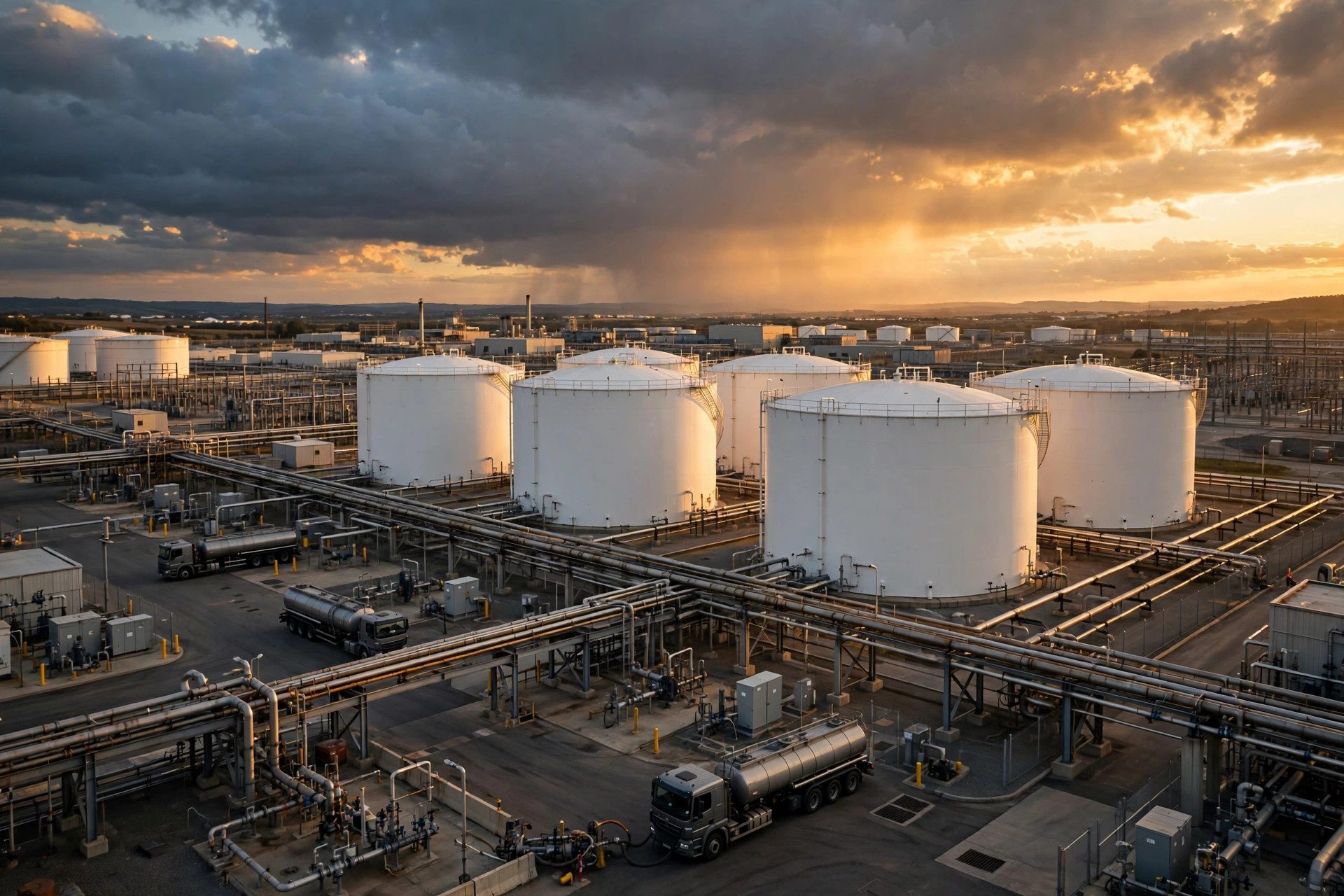
On October 2, 2026, the leaders of the world's seven largest advanced economies made a decision that could soon show up at your gas station. The G7 agreed to release 100 million barrels of diesel and crude oil from their emergency reserves over the next four months, a coordinated move aimed at taming record diesel prices and steadying a jittery global energy market.
This is the kind of headline that sounds abstract — until you realize how much of daily life runs on diesel. Trucks that deliver your groceries, buses, construction equipment, farming machinery, and the ships that move goods across oceans all burn it. When diesel prices spike, everything gets more expensive. Here's what the G7 diesel reserves release actually means, why governments did it, and what to expect next.
What Happened on October 2, 2026
The announcement came after a videoconference of G7 leaders — Canada, France, Germany, Italy, Japan, the United Kingdom, and the United States — chaired by French President Emmanuel Macron, whose country currently holds the G7's rotating presidency. The plan, coordinated through the International Energy Agency (IEA), commits the group to releasing 100 million barrels of diesel and crude oil from strategic stockpiles over four months, with diesel deliveries frontloaded so that much of the fuel reaches markets within the first 20 days.
The IEA's Executive Director, Fatih Birol, noted that this builds on an earlier collective action from March, under which 325 million barrels had already been released — more than 80 percent of the 400 million barrels pledged at that time. In other words, this is not the first such intervention this year, but it is the most explicitly diesel-focused one.
Why Diesel, Specifically?
To understand why the G7 singled out diesel, you need to know something about how fuel markets work. Crude oil is what comes out of the ground, but nobody burns crude oil directly. Refineries turn it into finished products — gasoline, diesel, jet fuel, heating oil — and diesel has been the trouble spot for months.
Several forces collided at once. A US-Israel war on Iran has curtailed exports from the Middle East, one of the world's key supply regions. Russian imports into Western markets are effectively zero under sanctions. US diesel inventories have fallen to their lowest levels since 1982. Brent crude, the global benchmark, was trading around $102 a barrel in early October 2026. Each of these factors alone would push prices up; together, they pushed diesel to record highs.
Diesel matters more than many people realize because it powers the logistics backbone of the economy. Gasoline mostly fuels passenger cars, so high gasoline prices hit drivers directly. Diesel powers freight — the trucks, trains, and ships that move food, building materials, and consumer goods. When diesel is expensive, transportation costs rise, and those costs ripple into the price of nearly everything on store shelves. That is why governments worry about diesel prices not just as an energy issue but as an inflation issue.
What Are Strategic Petroleum Reserves?
Strategic petroleum reserves are government-held stockpiles of oil set aside for emergencies. The idea dates back to the 1970s oil shocks, when supply disruptions sent prices soaring and exposed how vulnerable importing countries were. Today, the United States maintains the world's largest such reserve, and IEA member countries are required to hold oil stocks equivalent to at least 90 days of net imports.
Releasing oil from these reserves is a classic government tool for calming markets. It works on a simple principle: prices rise when demand outruns supply, so adding extra supply — even temporarily — takes pressure off prices. A coordinated release is more powerful than any single country acting alone, because it sends a clear signal to traders that major governments are willing to keep intervening until markets stabilize.
How does the release actually work?
Governments don't literally load barrels onto ships themselves. A release typically means the state sells oil from its stockpiles into the commercial market, often through auctions, and refineries buy it. The IEA coordinates the timing and volumes among member countries so the effect is synchronized rather than piecemeal. Frontloading the diesel portion — pushing it out in the first 20 days — is designed to hit the market fast, when the shortage is most acute.
What Does This Mean for Ordinary People?
The most direct effect, if the plan works, is slower growth — or even a dip — in diesel and fuel prices over the coming weeks. That doesn't mean prices will return to where they were a year ago. A 100-million-barrel release is significant, but global oil consumption runs to roughly 100 million barrels per day, so the release equals about one day of world demand spread over four months. Its power lies less in raw volume and more in psychology: it tells speculators betting on ever-higher prices that governments will fight them.
For drivers of diesel vehicles, farmers, trucking companies, and anyone whose business depends on transport, even modest relief matters. Lower diesel costs can also ease broader inflation, since cheaper freight feeds through to food and goods prices — though that effect takes weeks or months to show up in the data that central banks watch.
The Trump Export-Ban Episode
One unusual subplot: US President Donald Trump had threatened to ban American diesel exports in an attempt to keep more fuel at home, then withdrew the threat. An export ban would have been a drastic step — the US is a major diesel exporter, and cutting off foreign buyers would have roiled allies' markets while doing uncertain good at home. The G7's coordinated approach effectively replaced that unilateral threat with a multilateral solution, which markets tend to find more reassuring.
What Happens Next?
Several things are worth watching in the weeks ahead:
- The pace of delivery. The diesel is supposed to be frontloaded within 20 days. If physical barrels reach refineries on schedule, prices should respond quickly; delays would blunt the impact.
- How markets react. Futures prices often move on announcements before any oil actually flows. Watch whether the initial price drop holds or fades.
- Whether more action follows. Birol's comment about the March release shows this is an ongoing campaign, not a one-off. If prices stay high, further releases — or other measures — are possible.
- Geopolitical developments. The underlying causes — the Middle East conflict, sanctions on Russia — haven't gone away. Reserve releases buy time; they don't resolve the supply problems at their root.
It is also worth keeping expectations realistic. Strategic releases are a bridge, not a fix. They can smooth out a price spike, but if the structural shortage persists beyond the four-month window, prices will climb again once the extra barrels stop flowing. For a fuller picture of how energy costs feed into the wider economy, see our guide to what GDP measures — fuel shocks of this kind are exactly the sort of event economists watch for in growth data.
Conclusion
The G7's October 2026 diesel release is a significant, coordinated bet that government stockpiles can calm one of the most important fuel markets in the world. It won't solve the geopolitical tensions or refinery constraints behind the shortage, but it could take the edge off record prices at a moment when households and businesses are feeling the squeeze. Whether it works will become clear in the next few weeks — in the price at the pump, in freight costs, and eventually in inflation figures. For now, it's a reminder of just how much of modern life still runs on diesel, and how quickly its price can become everyone's problem.