
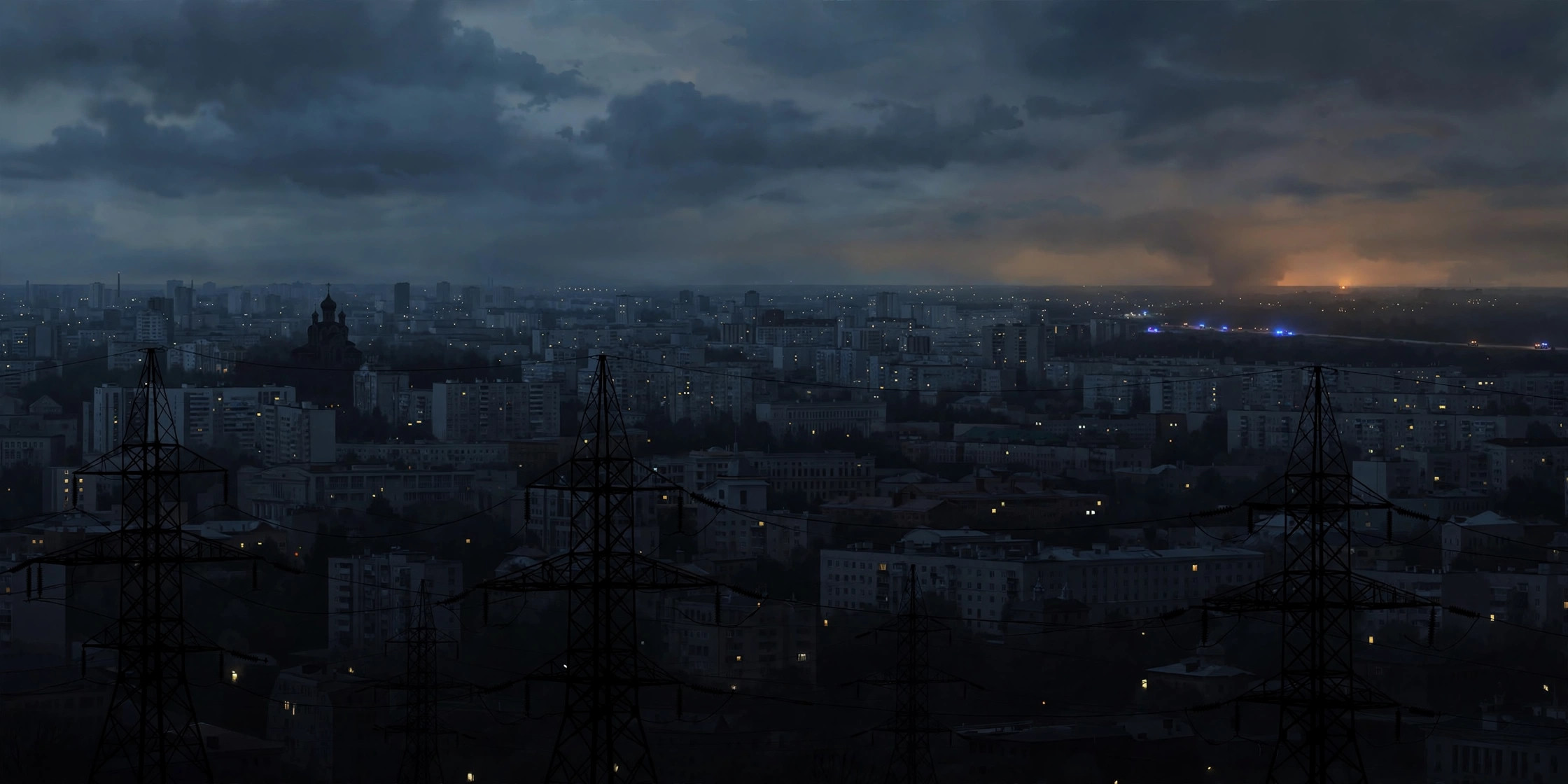
Overnight on 13–14 October 2026, Russia launched one of its largest recent barrages against Ukraine's energy system, knocking out power for more than 600,000 people and killing at least six, according to Ukrainian officials. The assault landed just days after US President Donald Trump announced what he described as an agreed halt to strikes on energy infrastructure — a claim neither Moscow nor Kyiv had confirmed — and it has become the dominant international story of the day, trending per news coverage across major outlets including the BBC, CNN, Reuters and The Times.
Ukrainian President Volodymyr Zelensky said Russian forces used 39 ballistic missiles and more than 120 attack drones and loitering munitions in the overnight attack, aimed at energy and critical infrastructure in Kyiv, the Kyiv region and Kharkiv. The strikes damaged equipment at 26 power-system facilities and four oil and gas facilities, he said, and left at least 600,000 people without electricity, with outages that could become more widespread. Reuters, citing Ukrainian officials, reported that 30 energy facilities were damaged. Russia's defence ministry said it had struck four power plants in and around Kyiv and two in Kharkiv, along with a data centre it said served the Ukrainian military.
The human cost mounted through the morning. Three people were killed in Kyiv, including two who died when a ballistic missile hit a nine-storey apartment building in the Desnianskyi district, and one more in the Holosiivskyi district, according to the city's mayor, Vitali Klitschko, and emergency services. More than 20 people were injured in the capital. Later tallies from regional officials, reported by France 24 and other outlets, put the nationwide toll at six or more, with two deaths in the Dnipropetrovsk region and one in Zaporizhzhia. Prime Minister Sergii Koretskyi said state railway facilities in five regions were also targeted.
Why this attack matters: the "energy ceasefire" dispute
The overnight barrage cannot be understood without the diplomatic row that preceded it. On Sunday, Trump announced that Russia and Ukraine had agreed to an immediate halt to attacks on each other's energy infrastructure — Ukraine's power grid on one side, Russia's refineries and fuel capacity on the other. He presented it as a done deal. But neither Moscow nor Kyiv confirmed any such agreement, and within hours of the announcement, Russian strikes were already being reported against Ukrainian energy sites. Our earlier coverage examined Trump's energy-ceasefire announcement and the strikes that followed it, and the first wave of attacks that undermined the claim.
The overnight attack of 13–14 October was far larger in scale, and Zelensky framed it as a direct answer to the American initiative. In a post on X, he called it a targeted strike "specifically against energy infrastructure — the very infrastructure covered by the ceasefire announced by the American President," and said the strike was "entirely deliberate and demonstrative in its scale." He accused Moscow of showing unprecedented public disrespect toward the United States, and said Russia "does not consider the American President's statements strong." He urged Washington and the international community to respond forcefully, calling for stronger sanctions on Moscow and additional air-defence support for Kyiv.
The episode exposes a recurring pattern of the war's diplomacy: announcements of restraint that are not matched by verifiable commitments on the ground. For Ukraine, the practical consequence is stark. Energy infrastructure has been a central Russian target in every winter of the full-scale war, and the timing of this attack — with cold weather approaching — has revived fears of widespread power and heating outages across the country in the months ahead.
An air-defence warning gap
A second thread running through the overnight attack is Zelensky's complaint that Ukraine received no early warning from its partners before a deadly ballistic-missile strike hit a major Kyiv power plant the previous day. In our coverage of that warning dispute, Zelensky said Ukrainian air defences detected the missiles only when they were already virtually on approach to the capital. Intelligence shared by the United States and other partners normally helps Ukraine defend against ballistic-missile attacks by providing the locations of launchers and data on where strikes are heading and when.
The interception figures from the overnight attack underline the strain. Ukraine reported downing just four of the 39 ballistic missiles, according to Reuters — a low rate that reflects Kyiv's weakened air defences against fast-moving ballistic missiles and jet-powered drones amid a shortage of weapons. Ballistic missiles travel far faster than the drones that make up most Russian barrages, leaving defenders only minutes to react, and early-warning data is often the difference between an interception and a hit.
The Starlink claim
Separately, a Ukrainian presidential adviser, Serhiy Beskrestnov, said SpaceX had introduced a speed limit on Starlink terminals in motion overnight without warning Ukrainian forces, disrupting a number of military missions. He suggested the timing was connected to the political situation. Starlink satellite communications have been widely used by Ukrainian forces for battlefield connectivity, and any restriction on the service would have operational consequences. The claim could not be independently verified from the reporting available at the time of writing, and it added a further layer of uncertainty to an already tense night for Kyiv.
The wider war context
The overnight strikes fit a broader pattern. Russia has stepped up its attacks on Ukrainian cities ahead of winter as it struggles to make decisive gains on the battlefield, and Ukrainian officials have warned that the energy system is the principal target. Ukraine, for its part, has increasingly attacked Russian oil refineries and logistics hubs in recent months, in what it views as one of the few ways it can respond to more than four and a half years of Russian bombardment. According to The Times, around 80 people have been killed by Russian attacks on Ukraine since 7 October.
For civilians in Kyiv and Kharkiv, the immediate concern is more practical: restoring power, repairing damaged substations and power plants, and preparing for the possibility of further strikes. Ukraine's largest private energy provider, DTEK, said the attack caused emergency power cuts in several Kyiv districts, and the mayor confirmed disruptions across the capital. Repair crews in Ukraine have become adept at restoring service after strikes, but repeated attacks on the same facilities make each round of repairs harder and slower.
Diplomatically, the attack puts the Trump administration's peacemaking claims under fresh scrutiny. The president has said both sides agreed to halt energy strikes; the overnight barrage suggests that, whatever was discussed, it did not translate into restraint. Whether Washington responds with the tougher sanctions and air-defence aid Zelensky has requested will be the key question in the coming days — and one that will shape how seriously future ceasefire announcements are taken in Kyiv, Moscow and European capitals.
What to watch next
Three things will determine what follows. First, the pace of power restoration: Ukrainian authorities will publish updates on how many of the 600,000 affected customers are reconnected, and whether outages spread. Second, the Western response: whether the United States and its allies announce new air-defence deliveries or sanctions in reaction to the attack. Third, whether Russia continues the energy campaign in the nights ahead — a sustained campaign would confirm that the "energy ceasefire" was never real, and would set the tone for a difficult winter for Ukraine's civilians.
Sources
BBC News; CNN; Reuters; The Times; France 24; Al Jazeera; statements by Ukrainian President Volodymyr Zelensky, Kyiv Mayor Vitali Klitschko, Prime Minister Sergii Koretskyi and presidential adviser Serhiy Beskrestnov; Russia's defence ministry.