
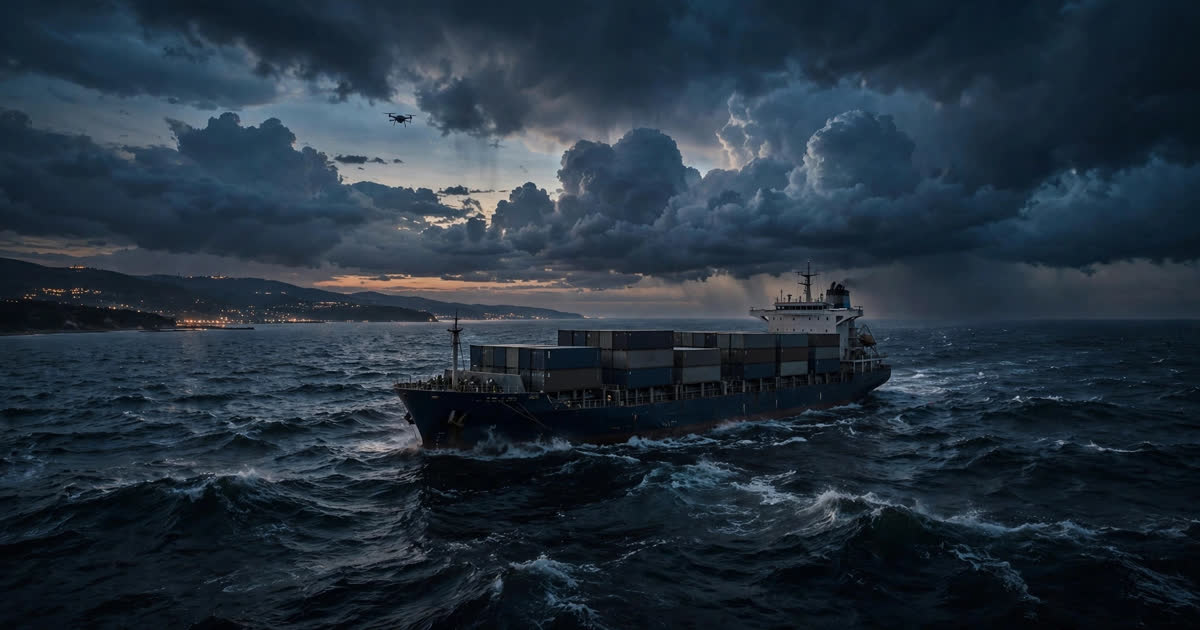
Two commercial cargo ships were struck by drones overnight off Bulgaria's Black Sea coast on October 13, 2026, sinking one vessel and leaving 11 sailors missing. Bulgarian officials described the incident as "absolutely unacceptable" and summoned Russia's ambassador, in a dramatic escalation that has pushed the Russia-Ukraine war closer to NATO territory and rattled global food-supply fears.
The story is trending per news coverage across international outlets, with Reuters, the Associated Press and the Financial Times all reporting on the attacks. Here is a full explainer of what happened, who is affected, and why the world is watching.
What happened off Bulgaria's coast
The attacks happened overnight, roughly 32 to 34 kilometres from Bulgaria's coastline, according to information reported by the Associated Press. Two cargo vessels were struck by drones in the hours before dawn on Tuesday.
The first and worst-hit vessel was identified by Bulgarian officials as the Guinea-Bissau-flagged cargo ship HS Dignity. (Bulgarian President Iliana Iotova named the vessel as HS Dignity; some Bulgarian media outlets also reported the name Azov Concord in early coverage.) The ship sank near the coastal village of Krapets, close to Bulgaria's border with Romania. Five crew members were rescued, but 11 remained missing as search-and-rescue teams continued to scour the waters.
The vessel had been sailing toward the Romanian port of Braila with a partial cargo, and vessel-tracking information cited by Reuters showed it had previously called at the Algerian port of Mostaganem. Its Turkey-based manager was not immediately available for comment, according to early reports.
The second ship, the Malta-flagged Chelsea-3, which is Ukrainian-owned, was hit by three drones about 18 miles from the coast. All 15 of its crew members - seven Ukrainians and eight Azerbaijanis - were rescued, and none suffered serious injuries, Bulgarian officials said.
The search for the missing sailors
With 11 sailors still unaccounted for, Bulgarian rescue teams continued searching the waters off Krapets on Tuesday. Five crew members from the sunken vessel had been pulled from the sea alive, but the fate of the remaining 11 was unknown.
The sinking is the second deadly sinking of a cargo vessel in the area in a week, a grim marker of how rapidly commercial shipping in the Black Sea has been drawn into the war. Each new incident raises the stakes for the seafarers who keep grain and goods moving through one of the world's most contested waterways.
Bulgaria summons Russia's ambassador - but stops short of blame
Sofia moved quickly on the diplomatic front. Bulgaria summoned Russia's ambassador, Eleonora Mitrofanova, for talks on Tuesday. Prime Minister Rumen Radev called the attack "absolutely unacceptable" and "another attack in the immediate vicinity of Bulgarian territorial waters" in a televised address, adding that the outcome of the incident "benefits the Russian Federation".
At the same time, Radev said Bulgaria did not have solid and clear evidence to accuse any party directly, though he added that "logic" suggested Russia was behind the strikes, since it made little sense for Ukraine to destroy its own ships. The prime minister asked allies for help in determining the origin of the attack and later spoke with NATO Secretary-General Mark Rutte, who said the alliance would step up its defence posture in the region as needed.
Ambassador Mitrofanova, according to the Bulgarian news agency BTA, said she had no information from Moscow and suggested the attacks may have been a provocation by a third party. There was no immediate comment from Moscow in early reports.
Ukraine and the European Union condemned the strikes. European Commission President Ursula von der Leyen said on X that "the Black Sea has become another front of escalation of the Russian war in Ukraine" and that those responsible should be held accountable. Ukraine's Foreign Minister Andrii Sybiha said the strike showed Moscow's "deliberate disregard for civilian lives" and warned that Russia was attacking the Black Sea - "a lifeline for global food security" - to weaponise hunger.
Why the Black Sea matters: grain, food and the war's new front
The Black Sea is one of the world's most important arteries for grain exports, carrying Ukrainian and Russian agricultural shipments to markets across Africa, the Middle East and Asia. When ships start sinking within sight of a NATO member's coastline, the disruption is not only military - it is economic. Insurers raise premiums, shipping companies reroute or pause sailings, and food-importing countries face the prospect of higher prices and tighter supply.
The location is what makes this incident especially alarming. Bulgaria is a NATO member, and attacks roughly 30 kilometres from its coast push the conflict to the doorstep of the alliance. NATO's promise to review its regional defence posture signals that the incident is being treated not as a distant skirmish but as a security question for Europe itself.
The strikes also land in the middle of an already volatile moment in the wider Russia-Ukraine conflict. Ukrainian President Volodymyr Zelensky has been warning of continued Russian attacks on Ukraine's energy infrastructure even as a claimed energy ceasefire hangs in doubt, and Kyiv has vowed to keep up retaliatory strikes against Russian oil refineries. The Black Sea attacks add a maritime dimension to an escalation that has been spreading across energy, infrastructure and now commercial shipping.
A wider crisis at sea
The Black Sea strikes are not an isolated episode. Commercial shipping has come under pressure in multiple conflict zones at once. Just days earlier, two tankers carrying Indian crews were hit by drones near the Strait of Hormuz, leaving two sailors missing off Oman. And in the Middle East, Houthi attacks on Riyadh's airport and Saudi oil infrastructure have killed more than a dozen people and disrupted air travel across the kingdom.
Governments are responding with stepped-up enforcement. French forces recently intercepted a Chinese-owned oil tanker carrying suspected Russian cargo in the Indian Ocean, part of a crackdown on so-called "shadow fleet" vessels - with more than 20 detentions since 2025, according to trade-press reports. The pattern is unmistakable: the world's shipping lanes are becoming contested space, and the commercial vessels that carry food and fuel are caught in the middle.
What happens next
The immediate priority is the search for the 11 missing sailors, whose chances diminish with every passing hour. Beyond that, three questions will define what comes next: who carried out the strikes, how NATO and the EU respond, and whether insurers and shipping companies keep sailing the Black Sea routes.
The investigation into the attacks' origin is ongoing, with Bulgaria asking allies for technical help. Any confirmed attribution could trigger a sharp response - from sanctions to a heavier NATO naval presence. Even without confirmed attribution, the political signal is clear: the war's maritime front is expanding, and the countries that depend on Black Sea grain cannot afford to look away.
Worldlession will update this story as rescue efforts continue and the investigation develops.