
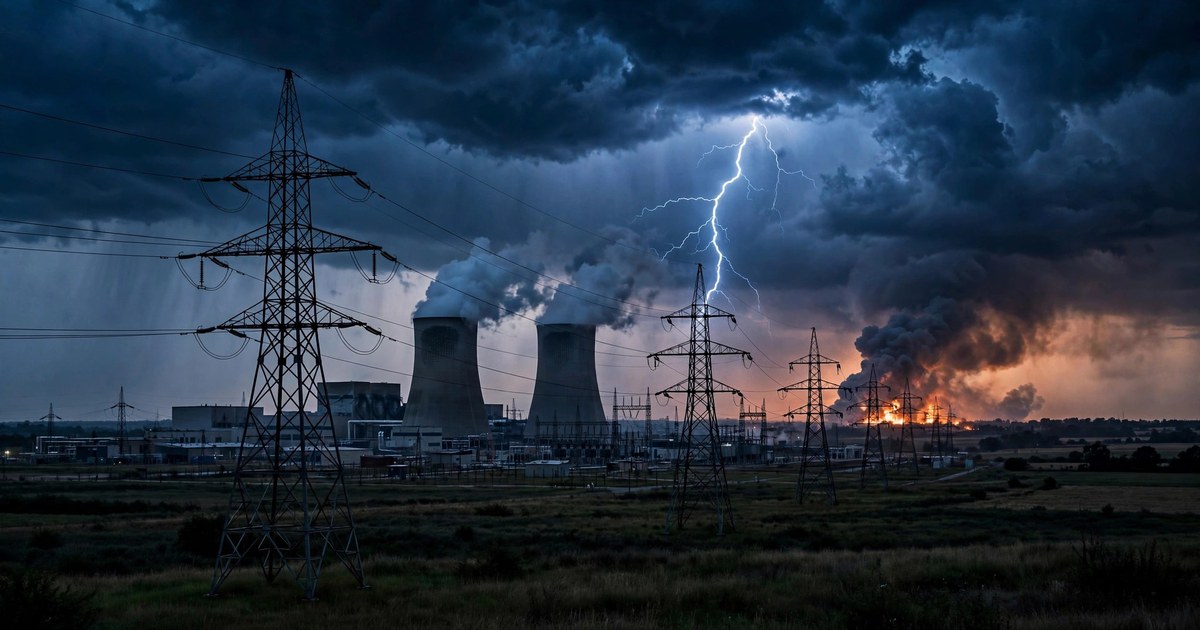
On Sunday, 11 October 2026, US President Donald Trump took to his Truth Social platform to declare what he presented as a done deal in the Russia-Ukraine war: "Effective immediately, there is an ENERGY CEASEFIRE in the War between Russia and Ukraine. Both parties have agreed. Do not break it!" Within hours, however, the claim was publicly unraveling. Ukraine's president said the announcement was news to him, Russia's Kremlin offered no confirmation, and — most damaging of all — Ukrainian officials reported that Russian missiles and drones were striking Ukraine's electricity infrastructure that very evening, in Kyiv and in the northeastern Kharkiv region.
The gap between the announcement and the reality on the ground became the story itself. This is what we actually know about the claim, the strikes that followed it, and how the world reacted — a story trending per news coverage across major outlets including CNN, The Times, Le Monde and Reuters partners through Monday, 12 October 2026.
What Trump announced
Trump's post arrived on Sunday morning US time. In a style familiar from his previous social-media diplomacy, he announced an immediate mutual halt to attacks on each other's energy infrastructure — Ukraine's power grid on one side, Russia's refineries and diesel capacity on the other — and asserted that both parties had already agreed. He offered no details of any negotiation, no start time beyond "effective immediately," and no enforcement mechanism.
The timing was conspicuous. Days earlier, Trump had spoken with Russian President Vladimir Putin, and the two had announced a controversial arrangement to supply markets with Russian diesel fuel. US officials, including Trump's son-in-law Jared Kushner and special envoy Steve Witkoff, had been in Miami holding talks. Ukrainian President Volodymyr Zelenskyy had sharply criticized the diesel news, arguing it would prolong the war — to which Trump responded by suggesting Ukraine should "get a new leader who can make a deal." Bipartisan US senators had meanwhile called on Trump to reverse the Russia diesel arrangement, arguing it conflicted with US law restricting energy imports until Russia ends its aggression against Ukraine.
There was also precedent for skepticism: Trump had made a similar ceasefire announcement on 14 September, which Putin rebuffed, after which both sides continued exchanging strikes.
Zelenskyy: "news to me"
The sharpest response came from the Ukrainian side. Zelenskyy told Axios that the announcement "was news for me," adding: "If President Trump negotiated it with Putin, please tell us when the ceasefire begins. We are ready, and we will accept it." A Ukrainian official told CNN the delegation had "just read it as you did."
Zelenskyy was quick to offer conditional support. On X he wrote that he had discussed the news with Canadian Prime Minister Mark Carney, Finnish President Alexander Stubb and NATO Secretary General Mark Rutte, adding: "Ukraine supports the ceasefire, and it is important that Russia support it as well. We are awaiting details from the American side. For our part, Ukraine always FULLY supports steps toward de-escalation, the protection of lives, and the decisions needed to end the war and guarantee lasting peace."
In an ABC interview the same day, he put the offer in blunt terms: "Don't attack us. Don't kill our children. We will stop attacking your diesel. And I think it's a fair deal." He also repeated his conditional offer to organize national elections if Russia agreed to a 60-day ceasefire.
It is worth noting that the core idea — a mutual halt to energy strikes — was not new. French President Emmanuel Macron had raised a similar double moratorium a month earlier on the sidelines of the UN General Assembly, and Zelenskyy had indicated Kyiv's openness to it.
The strikes that followed
What undermined the announcement most was the reported Russian response on the ground. Ukrainian officials said that after Trump's post, Russia attacked Kyiv's electricity grid, causing power cuts, followed by strikes on energy facilities in the northeastern Kharkiv region, including the large CHP-5 power plant. Zelenskyy said: "All of this happened after the president of the United States made his statement about an energy ceasefire," and noted that a power plant in Kharkiv was attacked that evening.
Reporting across outlets on Monday put the human cost in grim terms: Russian attacks killed six people in two Ukrainian regions amid the continued barrage. Zelenskyy said Ukrainian skies had been "infested with Russian 'shaheds'" all day, with glide-bomb strikes and attacks on energy infrastructure.
The Kremlin issued no immediate official statement confirming any agreement — leaving the deal without one of its two supposed signatories.
How the world reacted
European leaders walked a careful line between welcoming any de-escalation and noting the on-the-ground reality. France's Macron wrote on X that Russia, "at this stage, continues to refuse [the ceasefire] and has even intensified its strikes on Ukrainian infrastructure in recent hours," adding that he stood with Ukraine and its president.
On Monday, EU foreign policy chief Kaja Kallas said the bloc would welcome a truce on striking energy infrastructure "when it holds," but warned that Russia may not "stick" to any agreement. Britain's Prime Minister Andy Burnham wrote that Russia had stepped up its attacks on Ukraine's energy infrastructure, plunging civilians "into cold and darkness," while endorsing Trump's effort: "The UK strongly supports President Trump's call today for a sustained energy ceasefire to start now. Ukraine is ready if Russia stops its attacks. This is the best route to get energy and fuel back into world markets."
European capitals also moved to address Ukraine's air-defence gap. During a Sunday conversation with Zelenskyy, Finland's President Alexander Stubb promised munitions "in the coming days" to arm F-16 fighter jets, which Zelenskyy said can shoot down Russian jet-powered drones. With winter approaching, Ukraine faces a severe shortage of anti-ballistic missiles; European officials acknowledged that while the US military has been using large numbers of its Patriots in its own conflict with Iran, Europe is developing its own next-generation SAMP/T systems — though deliveries are unlikely before 2027.
What markets heard
Financial markets reacted to the claim faster than either military did. Oil prices fell on Monday after the announcement: Brent crude dropped 1.33% to $103.33 a barrel, US benchmark WTI declined 1.68% to $90.31, and ICE gasoil futures fell 3%, helped by promises of Russian diesel supplies.
Analysts, however, warned of the risks. Critics and defense analysts argued that easing pressure on Russian refineries could let Moscow maintain vital revenue without making substantive strategic concessions, while leaving European allies nervous about the predictability of American foreign policy. Whether any arrangement translates into a lasting pause on power-grid strikes remains deeply uncertain — the continued attacks on Sunday suggest that, at least for now, the claim and the reality are moving in opposite directions.
Why this matters
For context on how the story reached this point, read our explainer on Trump's original energy-ceasefire announcement and the background on Trump's call for new Ukrainian leadership after the Russia diesel deal.
The episode captures the central problem of ending this war through surprise declarations: a ceasefire requires two sides, verified terms, and someone watching for compliance. As of Monday morning, one side had not confirmed the deal at all, and its forces were reportedly bombing the other side's power grid. Europe's response — welcome the idea, doubt the follow-through, and keep shipping weapons — is likely to remain the default posture for as long as that gap persists.