
Between the night of October 7 and the morning of October 8, 2026, Iran and its Houthi allies struck two separate targets in rapid succession — an oil and chemical tanker near Qatar and Riyadh's King Khalid International Airport. The coordinated "one-two punch," as regional officials described it to the Wall Street Journal, killed at least six people, wounded dozens, cancelled hundreds of flights, and pushed oil prices sharply higher. It is the most serious escalation in the Gulf since the US-Iran conflict erupted in late February 2026.
Background: a conflict that never fully stopped
The United States and Iran have been in open conflict since late February 2026. A ceasefire collapsed in July, and since then the region has lived in a state of uneasy, punctuated confrontation. Iran's main source of leverage has been the Strait of Hormuz, the narrow waterway through which a large share of the world's seaborne oil passes. But that leverage has been slipping under sustained US pressure and a tightening blockade, leaving Tehran searching for new ways to impose costs on its adversaries.
Meanwhile, the Houthis in Yemen have continued their campaign of missile and drone attacks against Saudi Arabia — a campaign that has repeatedly reached deep into the kingdom. Riyadh's airports have been struck before, but the intensity of the current wave, with attacks on three consecutive days, marks a new level.
Adding to the tension, President Trump has publicly pledged that there will be no US strike on Iran before the November 3 midterm elections — a promise that effectively puts a clock on the current phase of the confrontation.
What happened: the tanker and the airport
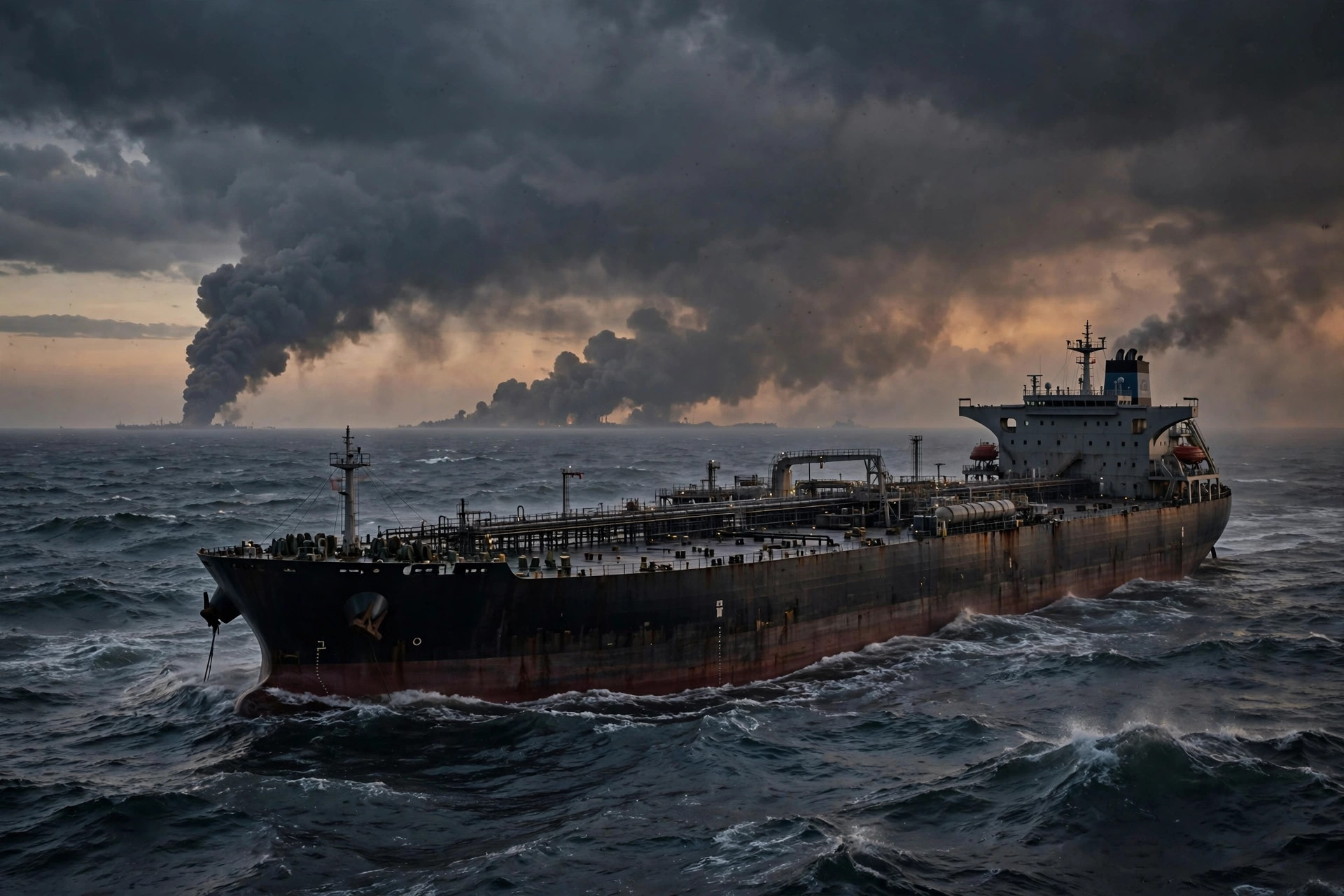
The tanker strike. Late on Wednesday night, October 7, an oil and chemical tanker sailing near Qatar was hit by projectiles. There were casualties, according to the maritime intelligence firm Vanguard and the UK Maritime Trade Operations office (UKMTO). No group has claimed responsibility, but regional officials pointed to Iran — a pattern consistent with past deniable attacks on commercial shipping in the Gulf.
The Riyadh airport attacks. On Thursday, October 8, Houthi ballistic missiles and drones struck King Khalid International Airport in Riyadh — the third straight day of attacks on the Saudi capital. Saudi Arabia said on Friday that the Thursday attacks killed three people, including a Saudia airline pilot, with others wounded. Aircraft and airport facilities were damaged, and hundreds of flights were cancelled, stranding travelers and disrupting one of the region's busiest hubs.
Attacks also hit Abha airport near the Yemen border. CNN reported that three people were killed and 36 wounded there over two days. Houthi leader Abdul-Malik al-Houthi delivered a televised speech on Thursday vowing that the attacks would continue, and specifically warned oil facility workers and airlines.
The Saudi response. A Saudi coalition spokesman said air defenses intercepted two ballistic missiles headed for Riyadh and one toward Khamis Mushait. But interception does not mean no damage: debris from the interceptions damaged a kindergarten and a medical complex — a reminder that even "successful" air defense carries costs on the ground.
Why it matters: oil, leverage, and the risk of wider war
The immediate economic shock was felt in energy markets. Brent crude rose sharply to around $103 a barrel, while US WTI traded near $91.63. Higher oil prices feed directly into fuel and transport costs worldwide — and ultimately into the price of almost everything, because energy underpins production and shipping. Our explainer on what inflation is breaks down how energy shocks translate into broader price rises.
Strategically, analysts quoted in the coverage see Tehran's hand in the timing. With its Hormuz leverage eroding under the US blockade, Iran appears to be demonstrating that it can still impose pain — on shipping, on Saudi infrastructure, and on global energy markets — without crossing the threshold into full-scale war. The goal, analysts suggest, is diplomatic: to build leverage that breaks the Hormuz stalemate and pressures Washington into negotiations, all while stopping short of a conflict that could spiral.
That calculation is inherently dangerous. The tanker strike near Qatar killed people; the airport attacks killed a pilot and civilians nearby; hundreds of flights were cancelled. Each incident raises the risk of miscalculation — a strike that hits the wrong target, or a retaliation that overshoots. Governments have responded to past energy-supply shocks by releasing strategic reserves, as explained in our piece on the G7 diesel reserves release.
The political calendar adds another layer. Trump's pledge of no US strike before November 3 gives Iran a defined window to escalate without facing immediate American retaliation — but it also means that whatever happens after the midterms is wide open. The November 5 hearing in the separate Lisa Cook inquiry and the post-election landscape will all compete for Washington's attention; see our coverage of the Supreme Court's tariff ruling for how the courts have been shaping this administration's room to maneuver.
Key facts
- The "one-two punch": Wednesday night–Thursday morning (Oct 7-8): a tanker struck near Qatar, then Houthi missile/drone strikes on Riyadh's King Khalid International Airport.
- The tanker: Oil/chemical tanker near Qatar hit by projectiles late Wednesday; casualties reported (Vanguard, UKMTO); no claim of responsibility; regional officials point to Iran.
- Riyadh airport: Third straight day of attacks on the city; Saudi Arabia said Thursday's attacks killed 3, including a Saudia pilot; others wounded; aircraft and facilities damaged; hundreds of flights cancelled.
- Abha airport: Near the Yemen border; 3 killed and 36 wounded over two days (per CNN).
- Saudi air defense: Intercepted 2 ballistic missiles toward Riyadh and 1 toward Khamis Mushait; debris damaged a kindergarten and a medical complex.
- Houthi vow: Leader Abdul-Malik al-Houthi, in a televised speech Thursday, promised continued attacks and warned oil facility workers and airlines.
- Oil prices: Brent around $103/barrel (up sharply); US WTI around $91.63.
- Context: US-Iran conflict since late February 2026; ceasefire collapsed in July; Iran's Hormuz leverage slipping under US pressure and blockade.
- US politics: Trump has pledged no US strike on Iran before the Nov 3 midterms.
- Analyst read: Tehran seeks leverage to break the Hormuz stalemate and pressure Washington diplomatically, stopping short of full-scale war.
What happens next
Several tracks will unfold in parallel. First, the immediate security picture: Saudi Arabia and its coalition partners will be on high alert for further Houthi strikes, and commercial shipping in the Gulf will face heightened risk — expect naval escorts, higher insurance premiums, and rerouted traffic. The warning to airlines from al-Houthi means carriers will be reassessing Gulf routes.
Second, the diplomatic track. The escalation is widely read as Tehran bidding for leverage ahead of any negotiation. Whether Washington engages — and on what terms — will likely depend on the November 3 midterms and on whether the attacks continue or pause. Watch for back-channel signals through intermediaries in the region.
Third, the energy track. If Brent holds above $100, governments may coordinate reserve releases and OPEC members may face pressure to adjust output. Sustained high prices would feed into global inflation data over the coming months.
The central risk remains miscalculation. A tanker sinking with major casualties, a missile penetrating airport defenses with mass casualties, or a retaliatory strike that hits Iranian territory directly could each collapse the fragile logic of "escalation without war." The coming days — and the approach of the US midterms — will determine whether this week's strikes were a negotiating tactic or the start of something worse.