
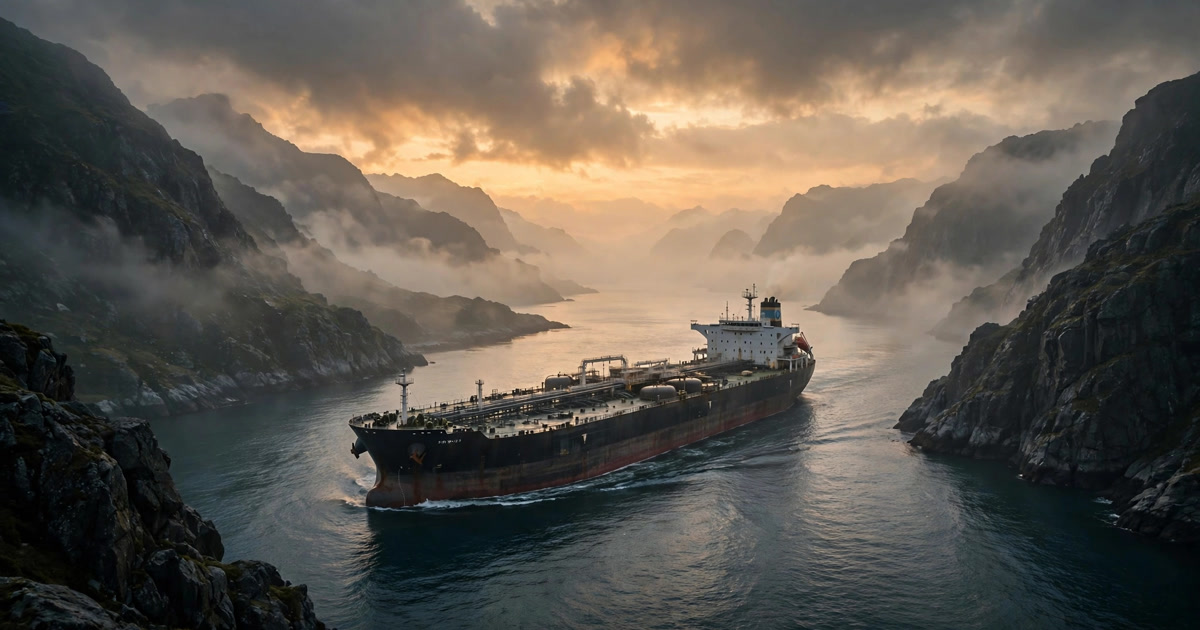
Two commercial tankers carrying Indian crews were attacked within hours of each other near the Strait of Hormuz on October 11, 2026, in one of the most serious episodes yet in the region's escalating maritime crisis. As of the latest reports reviewed on October 13, two Indian seafarers remain missing, and search-and-rescue operations are continuing off the coast of Oman.
The incident is trending per news coverage across Indian and international outlets, with India's government condemning the attacks and calling for an immediate end to strikes on commercial shipping. Here is a full explainer of what happened, who is affected, and why the world is watching.
What happened off Oman
On October 11, the Nicaragua-flagged tanker MT Petro Dolphin was struck by a drone at the Sohar Anchorage, off Oman's northern coast, according to India's Shipping Minister Sarbananda Sonowal. The United Kingdom Maritime Trade Operations (UKMTO) first reported an incident in the area and later reclassified it as an attack after confirming the drone strike.
The tanker was carrying 11 Indian seafarers. Nine crew members were rescued and reported safe, but two Indian nationals remain missing. The Forward Seamen's Union of India (FSUI) identified the missing sailors as Bir Bahadur Yadav and Amit Singh, and has sought urgent updates on their whereabouts while demanding stronger safeguards for seafarers operating in the region.
Local Omani Coast Guard units launched an active search-and-rescue operation immediately after the strike. The Indian Embassy in Muscat said it was in continuous contact with Omani authorities to monitor the situation, and Sonowal said Indian authorities were coordinating with all relevant agencies to fully support the rescue efforts. The extent of the damage to the vessel and any environmental impact were not yet clear in early reports.
A second tanker was hit the same day
In a separate incident on the same day, the Marshall Islands-flagged tanker MT Valthera was struck by an unidentified projectile while transiting the Strait of Hormuz. The impact caused a fire onboard the vessel. All 11 Indian seafarers aboard the Valthera were reported safe after the fire was brought under control, according to India's shipping ministry and state broadcaster reports.
No group publicly claimed responsibility for either attack in the initial reports. That uncertainty matters: officials have described the attacks as part of a recurring threat to commercial shipping, but the available evidence does not yet establish who launched the weapons.
Part of a wider wave of shipping attacks
The October 11 strikes did not happen in isolation. They are the latest in a string of attacks on commercial vessels in the Gulf region over the past two weeks:
- October 9: The Panama-flagged tanker MT Gem No. 2 was struck at Sharjah Anchorage in the United Arab Emirates. All 22 Indian sailors aboard were reported safe.
- October 10: US Central Command confirmed that a fighter jet disabled the propulsion of the Panama-flagged cargo ship Ocean Molica (also reported as Arika Sun) in the Gulf of Oman, saying the vessel had ignored repeated warnings while attempting to breach the blockade of Iranian ports. The crew was reported uninjured.
- Earlier incidents: A Panama-flagged vessel was struck by a projectile off the Omani coast while transiting the Strait of Hormuz, and the tanker M/T Valthera had also been hit by a projectile in the same area days earlier.
India's Ministry of External Affairs condemned the attacks, calling the recurring strikes on commercial shipping "deeply concerning" and warning that they risk further aggravating an already volatile situation. New Delhi called for an immediate cessation of such attacks, urged all parties to exercise restraint, and pushed for de-escalation through dialogue and diplomacy. India also stressed that freedom of navigation and the safe, unimpeded flow of maritime commerce through international waterways must be upheld.
The crisis comes against a broader regional backdrop. The recent wave of Iran-linked attacks across the Gulf has already raised alarms, and the UAE has called for reviving joint Gulf security and defence action in response to the deteriorating security environment. A recent UAE rescue of 22 crew members from a burning tanker underlined how quickly routine voyages are turning into emergencies.
Why the Strait of Hormuz matters
The Strait of Hormuz connects the Persian Gulf to the Gulf of Oman and the Arabian Sea, and roughly a fifth of globally traded oil passes through it. That makes it one of the world's most important energy chokepoints. Any sustained threat to shipping there ripples immediately into energy markets: oil was already hovering near $106 a barrel as Asian markets sold off this week.
The human stakes are equally high. India is one of the largest contributors of sailors to merchant shipping worldwide, with more than 320,000 active seafarers, according to the shipping ministry. Several Indian mariners have been killed in attacks in the Strait of Hormuz since the United States and Israel launched strikes on Iran on February 28, and the repeated targeting of vessels carrying Indian crews has made seafarer safety a national priority for New Delhi.
What to watch next
- The search: The Omani Coast Guard's search for the two missing seafarers, Yadav and Singh, remains the immediate priority. No confirmed announcement of their recovery had been made as of the latest reports reviewed.
- Attribution: No group has claimed the October 11 attacks, and investigators have not publicly established responsibility. Claims circulating online — including assertions pinning the strike on specific states — remain unconfirmed by officials.
- Diplomatic response: India's MEA has called for de-escalation through dialogue and diplomacy, while the FSUI is pressing for stronger protections and family support. Whether Gulf states mount a coordinated maritime response will shape the weeks ahead.
- Oil markets: Further attacks on shipping could push crude prices higher still, feeding directly into inflation and freight costs worldwide.
Reporting sources: Times Now World, Dainik Jagran, the Associated Press and Indian Express coverage of the incidents, United Kingdom Maritime Trade Operations (UKMTO) incident reports, statements by Union Minister Sarbananda Sonowal, and India's Ministry of External Affairs.