
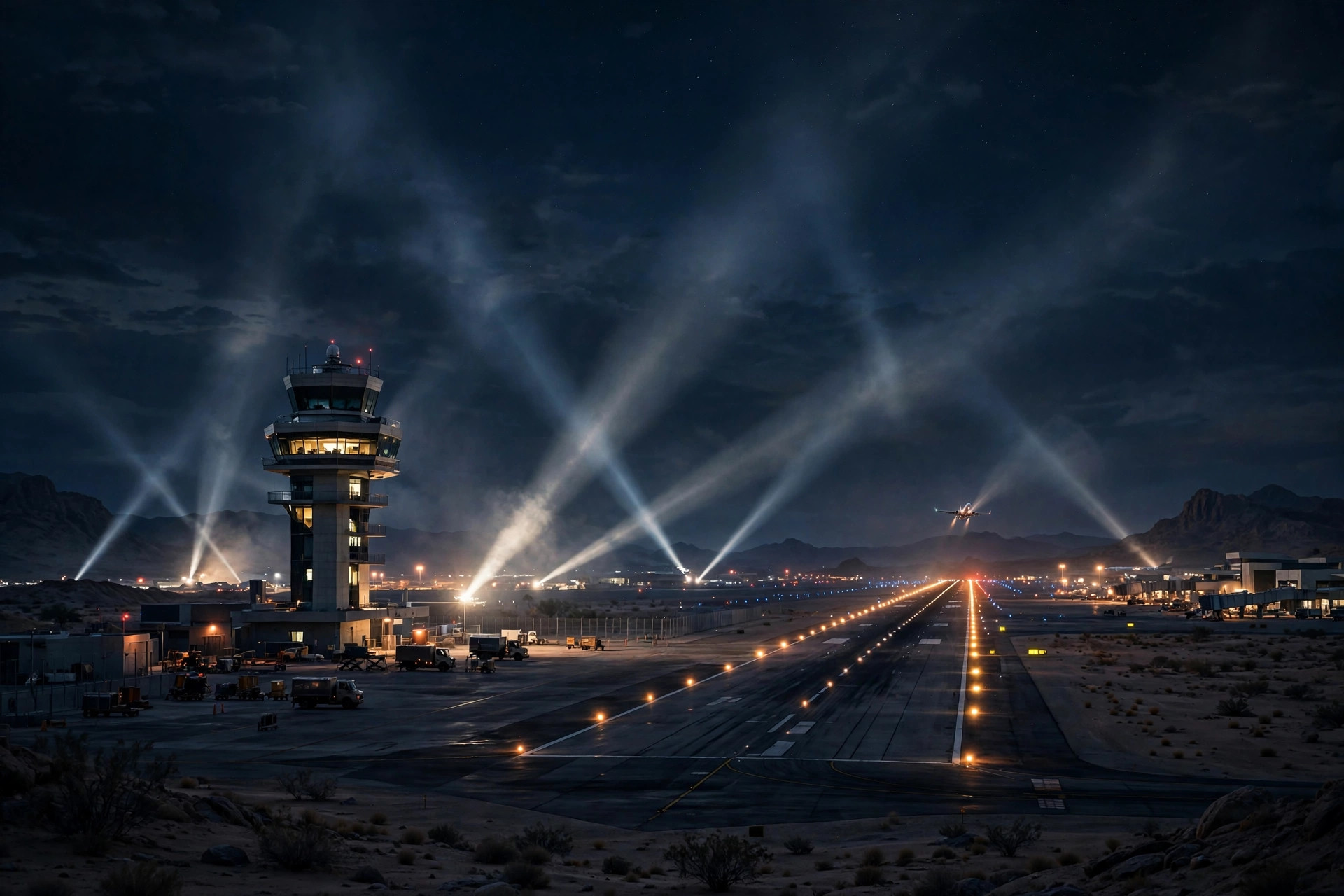
The crisis around Saudi Arabia's airports deepened on 11 October 2026 when the area around King Khalid International Airport in Riyadh was hit by another suspected attack and reportedly evacuated — just one day after a missile strike on the airport killed at least 12 people and injured more than 300. The Houthis, who are blamed for the attacks, have now warned airlines and passengers not to use Saudi Arabian airports, prompting several carriers to suspend flights to the Saudi capital.
The warning marks a dangerous escalation: a direct attempt to shut down a major country's civilian aviation through threats of force. For travellers, airlines, insurers and governments, the question is no longer whether Saudi airspace is risky, but how long the disruption will last — and how far it might spread.
Background: who the Houthis are and what they can do
The Houthis — formally Ansar Allah — are the armed movement that has controlled Yemen's capital Sanaa and much of northern Yemen since 2014, after seizing power from the internationally recognised government and triggering a civil war that drew in a Saudi-led coalition. Over a decade of conflict, the group has built one of the most capable missile and drone arsenals of any non-state actor in the world, with weapons assessed by Western governments as supplied or enabled by Iran — a charge Tehran has at various times denied or downplayed.
That arsenal has repeatedly reached beyond Yemen's borders. The Houthis have fired ballistic missiles and drones at Saudi cities, oil facilities and airports for years, and since late 2023 they expanded their campaign to Red Sea shipping, attacking commercial vessels in what they described as solidarity with Palestinians in Gaza. The pattern is consistent: use relatively cheap, hard-to-stop weapons to impose disproportionate economic and psychological costs on wealthier adversaries.
Airports are attractive targets in this logic for several reasons. They are high-visibility symbols of normal life and economic confidence; even an unsuccessful attack forces closures, diversions and security reviews; and sustained threats can deter airlines and travellers, draining tourism and business travel. The 2019 drone and missile attack on Saudi oil facilities at Abqaiq — attributed by the US and others to Iran — demonstrated how strikes on critical infrastructure can send shockwaves through global energy markets. Civilian airports raise the stakes further because of the direct risk to passengers.
What happened
On 10 October 2026, a missile attack struck King Khalid International Airport in Riyadh, killing at least 12 people and injuring more than 300, according to the reports. Our earlier coverage detailed the first attack and its immediate aftermath — the casualties, the emergency response and the first indications of Houthi responsibility.
The Houthis then issued an explicit warning to airlines and passengers not to use Saudi Arabian airports — effectively declaring the country's civilian aviation a target. Several airlines responded by suspending flights to Riyadh, a decision driven by duty-of-care to crews and passengers, soaring war-risk insurance costs, and the operational impossibility of running schedules into an airport under threat.
On 11 October, the crisis escalated again: the airport area was hit by another suspected attack and was reportedly evacuated, according to the National Post's reporting ("Saudi Arabia's Riyadh airport hit by another Houthi strike day after fatal attack"). An evacuation of one of the Middle East's busiest airports, coming a day after a mass-casualty strike, underlines how rapidly the situation is deteriorating.
The airport attacks have not occurred in isolation. They follow coordinated Iran-Houthi attacks on a tanker and on Riyadh reported earlier in the month, and governments are reacting across the board: Canada has issued a travel warning advising against travel to Saudi Arabia, while Indian crew members were reported safe after a tanker attack near Sharjah. The region is experiencing a multi-front pressure campaign, and civilian aviation is now squarely in the crosshairs.
Why it matters
First, there is the immediate human cost: at least 12 dead and more than 300 injured in a single strike on civilian infrastructure. Attacks on airports are attacks on ordinary people — travellers, airport workers, families — and they are treated with particular gravity under international norms precisely because of that.
Second, there is the aviation system itself. When airlines suspend flights, the effects cascade: stranded passengers, broken cargo links, crew and aircraft displaced across the network, and insurance premiums that can make routes uneconomical even after the immediate danger passes. The region's aviation sector has already endured security scares this month, and each new incident compounds the reputational damage. Riyadh is a major hub; prolonged disruption there affects connections across the Middle East, South Asia and beyond.
Third, there is the strategic signal. A warning to airlines is a form of economic warfare — an attempt to coerce Saudi Arabia by throttling the connectivity its economy depends on, from business travel to the tourism ambitions of Vision 2030. It also tests the response of Saudi air defences, which have intercepted many Houthi projectiles over the years but cannot stop everything, and of Saudi Arabia's allies, who must decide how far their support extends.
Finally, there is the escalation risk. Each round of attack and retaliation narrows the space for de-escalation. The involvement of Iran — directly or through its support for the Houthis — means the crisis is entangled with the wider confrontation playing out across the region, from the tanker attacks to the military posturing in the Gulf. Miscalculation is the constant danger.
Key facts
- 10 October: Missile attack on King Khalid International Airport, Riyadh — at least 12 killed, more than 300 injured.
- Houthi warning: The Houthis warned airlines and passengers not to use Saudi Arabian airports; several airlines suspended flights to Riyadh.
- 11 October: Another suspected attack hit the airport area, which was reportedly evacuated (National Post).
- Wider context: Follows coordinated Iran-Houthi attacks on a tanker and Riyadh; Canada issued a travel warning against travel to Saudi Arabia; Indian crew reported safe after a tanker attack near Sharjah.
- Houthi capabilities: A decade-long build-up of ballistic missiles and long-range drones, assessed by Western governments as Iranian-enabled, previously used against Saudi cities, oil sites and Red Sea shipping.
What happens next
In the short term, expect the flight suspensions to hold and possibly widen — airlines will not resume normal operations until the threat picture stabilises, and insurers will keep risk premiums elevated. Travellers with plans involving Saudi Arabia should monitor airline advisories and government travel guidance closely, and build flexibility into bookings.
Militarily, the key variables are Saudi Arabia's defensive and retaliatory choices and whether the Houthis attempt to make good on the threat against other Saudi airports — Jeddah, Dammam and the Red Sea tourism gateways would be the obvious next pressure points. Diplomatically, the attacks will intensify pressure for a response that deters without igniting a wider war — the hardest balance in statecraft. What is clear is that the era in which the Houthi threat could be treated as a Yemeni problem is over: it is now a direct challenge to the safety of international civil aviation.
Sources
Reporting drawn from BBC, National Post (October 2026).